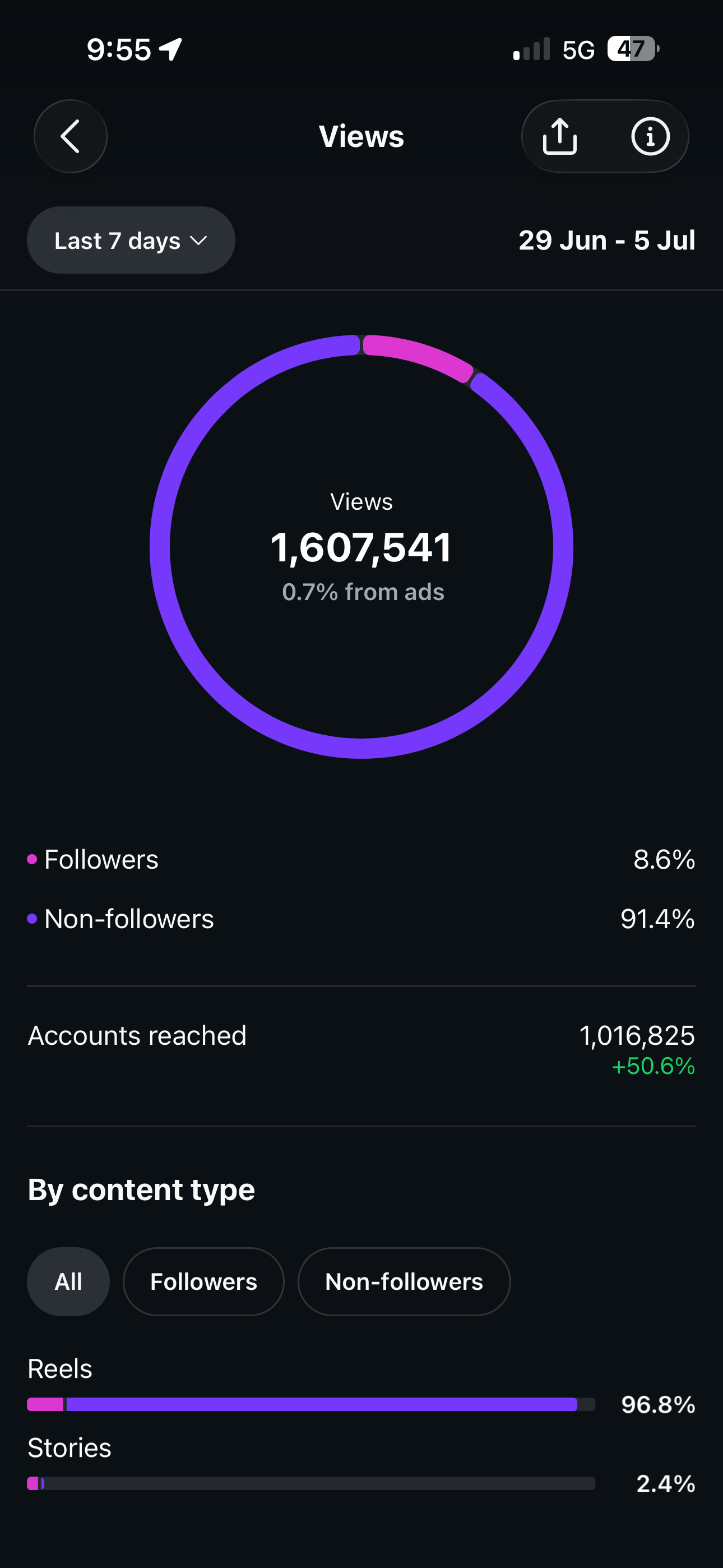
Last 7 days1,607,541 views, 1,016,825 accounts reached
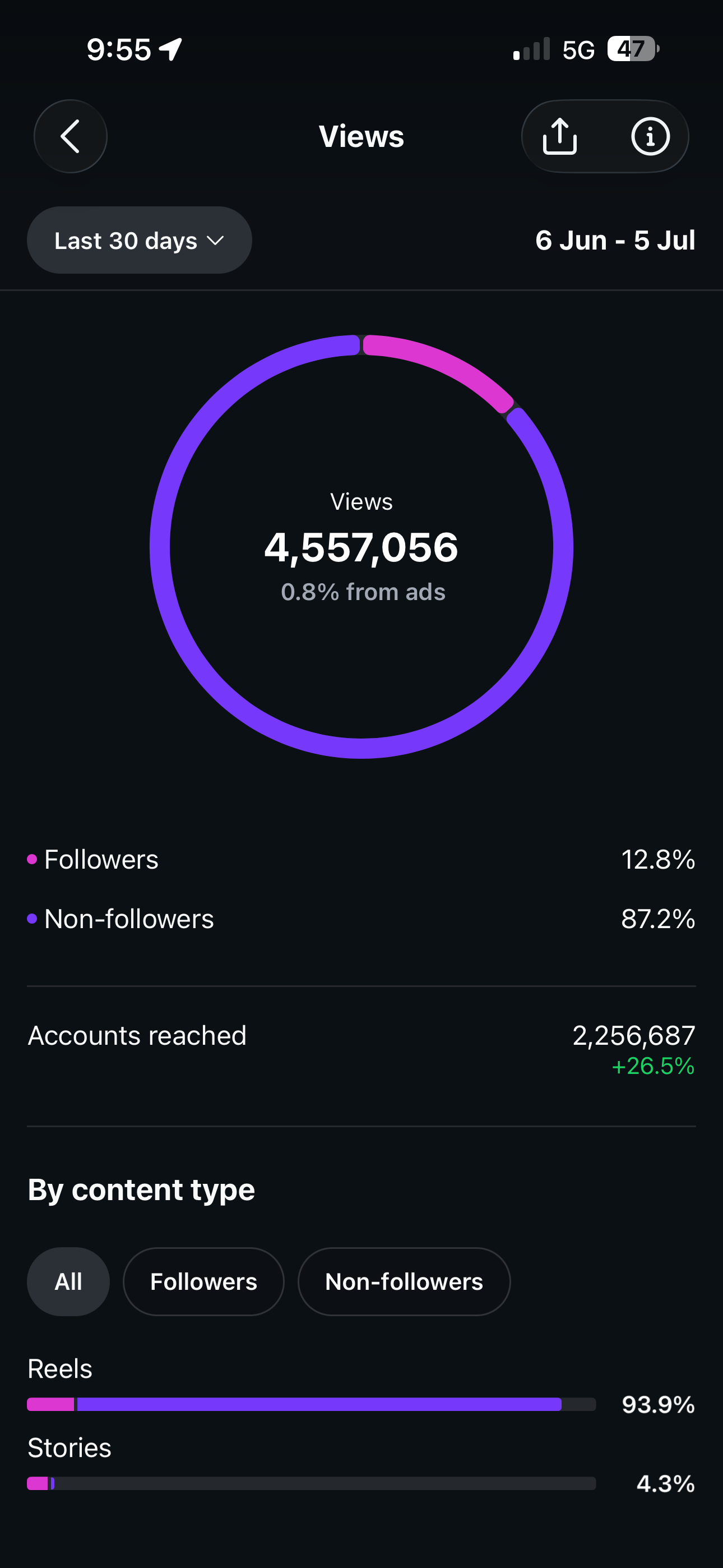
Last 30 days4,557,056 views, 2,256,687 accounts reached
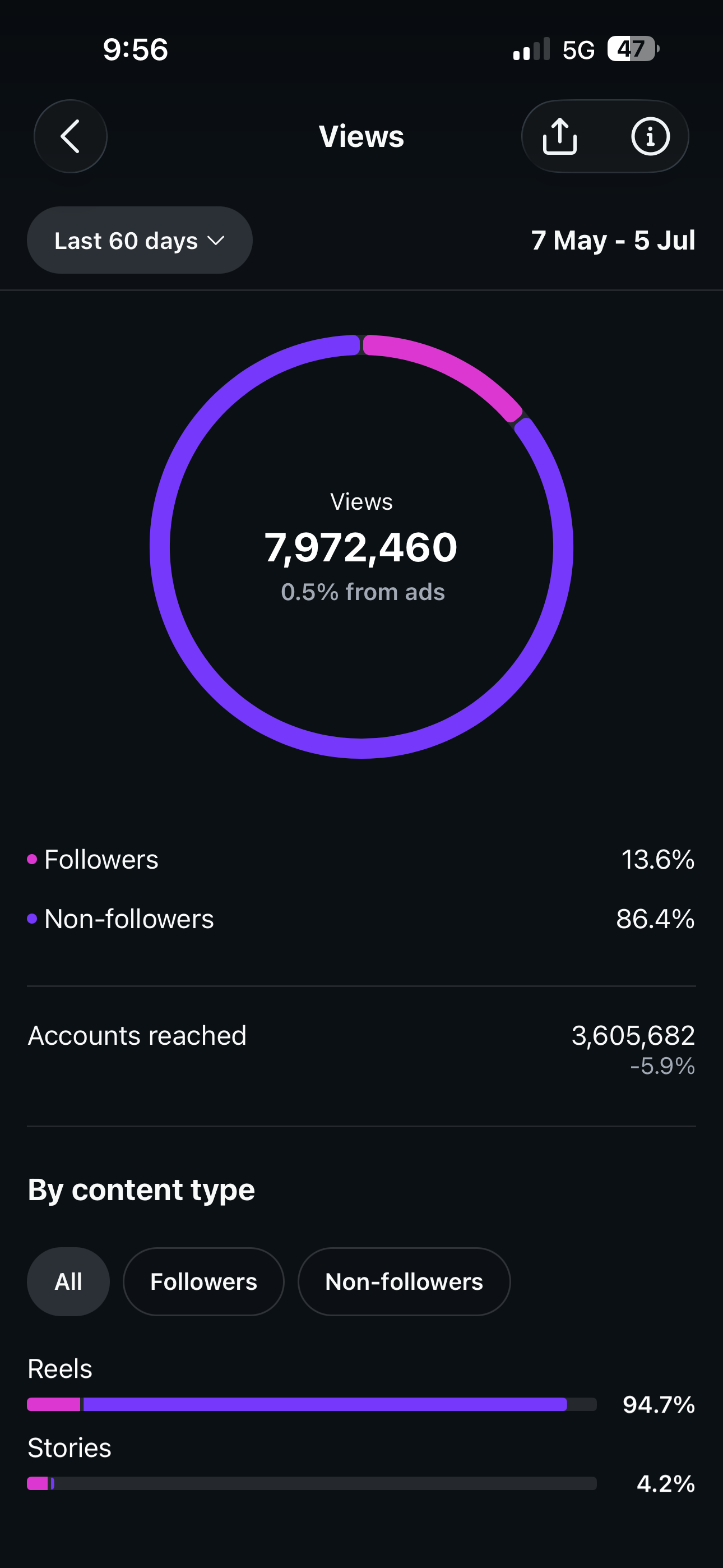
Last 60 days7,972,460 views, 3,605,682 accounts reached
Fifteen coordinated agents across four layers, sharing state so they stay in sync, all reporting into a single morning brief.
Running a content business at scale means doing four things well, at daily frequency, all at once: engaging a real audience without it feeling automated, keeping a pipeline full of on-brand ideas, learning from what actually performs instead of guessing, and fielding a constant stream of inbound business without losing deals in an inbox. Done by hand, that is close to a full-time operations team.
I wanted to know whether a coordinated set of autonomous agents could run all four in parallel, on schedule, without ever losing the owner's real voice or judgment on anything that leaves the account. So I designed one, and ran it live.
Replace the ops team with a system. Keep the voice and the judgment human.
Each agent runs on its own schedule and reads and writes to a shared set of files, so the whole system stays in sync rather than drifting into fifteen disconnected tools.
The hard part of an agentic system is deciding what it may do on its own and what it must hand back to a person. The guardrails are the design.
The system went live on June 28 and ran on schedule, with a human approving only what left the account. The point was that it held together: engagement, content, feedback, and business development all running at once without drifting or going off-voice. As evidence it worked, the platform's own insights showed the acceleration: in the first seven days it drove 1.6M views, 1.0M accounts reached, and 158K interactions, nothing projected. Daily views ran roughly 114,000 the prior month and about 230,000 in the first full week, close to double, with Reels carrying about 95% throughout. On the business side, the deal agents surfaced and triaged 20+ inbound PR and collaboration opportunities in about a week, including an early-preview approach from Maison Guerlain (LVMH) ahead of an August launch. I treat the reach as proof the autonomous system performed, not as the achievement itself; the achievement is the architecture and the judgment layer that governs it.
None of the fifteen agents depend on anything specific to the vertical they were proven in. Every content-driven business hits the same four bottlenecks, whether it is a streaming brand's social presence, a fintech's community, a boutique brand, or a creator: someone has to engage the audience, someone has to keep the pipeline full, someone has to turn performance data into a decision, and someone has to keep business development moving.
What transfers directly is the design: the four-layer architecture, the voice-consistency approach, the safety-first pacing on anything touching a live account, and the discipline of drafting rather than auto-sending anything that represents the business. What gets rebuilt per client is the specific voice, roster, formats, and pricing rules. That customization is the actual work.
This is the conviction the rest of my portfolio has been building toward: the highest-leverage design increasingly means architecting the agentic systems that produce outcomes, then designing the judgment that decides what a machine may do on its own.
Building this end to end sharpened how I think about autonomy and trust: the interesting decisions were rarely "can an agent do this," they were "should it, and where does a human stay in the loop." That framing, systems that act plus judgment that governs, is exactly what I want to bring to a product team designing with AI at scale.