Credit Karma · Tax
A refund number people could trust, and a front door they would actually open.
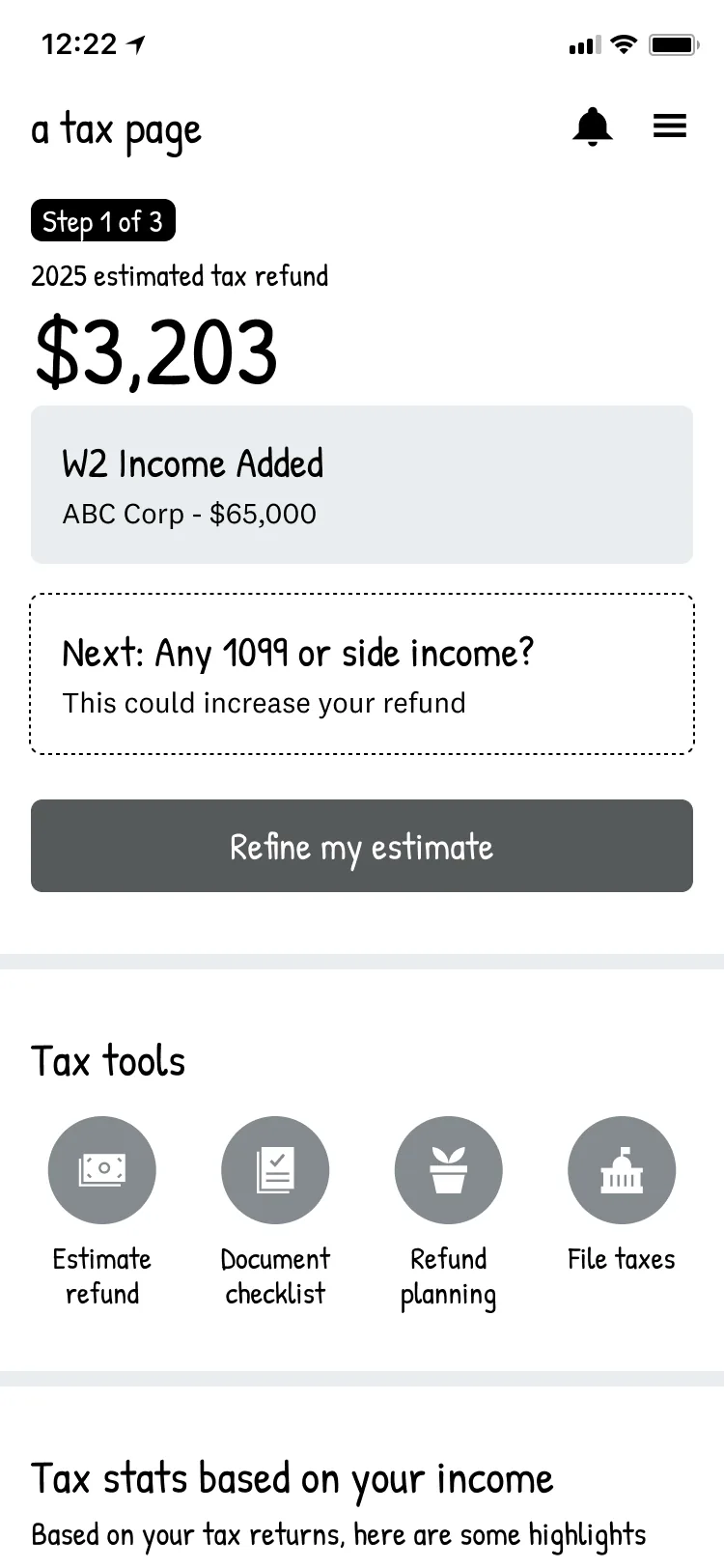
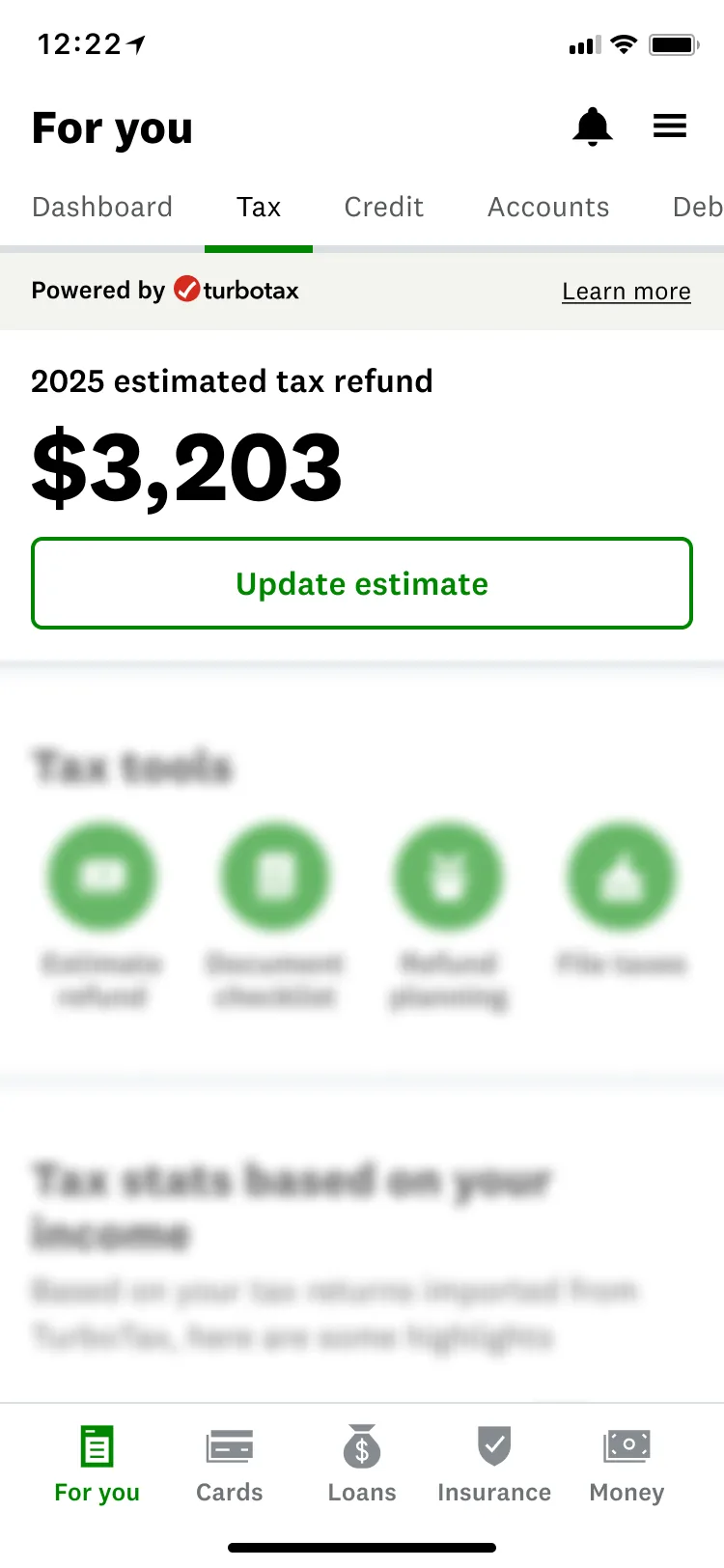
Late in the year, before anyone has filed, members start to wonder: am I getting a refund, or am I going to owe? Credit Karma already holds a lot of the answer. From what we know about a member, especially returning members, we can project what they are likely to get back or owe, well before tax season. The Tax Refund Estimator turns that into a number a member can plan around, and it is the flagship experience that carries members over to file with Intuit TurboTax. It is an engagement product first, and revenue follows from engagement.
I led design on a brand-new pod with no established playbook, which meant the first job was not drawing screens, it was deciding what was worth building and why. The surface is high traffic and high stakes: a refund figure is not neutral information. People build plans on it. If the number feels off, or the flow reads like it is selling instead of estimating, trust and engagement both collapse. And the tax law underneath was still being written, with real legal exposure around who qualifies, when, and why. My job was to create clarity in that ambiguity and set a direction the whole pod could build on.
In tax, the design has to earn trust and hold attention at the same time. Lose either one and the number stops mattering.
Milestone one came down to the entry point, because nothing downstream matters if members will not come through it. The senior instinct is to design the best door. The harder question, the one I anchored the pod on, was which door is worth building at all. So before spending a sprint of engineering on a guess, I put concepts in front of members across roughly four rounds to find the real signal, then let the market settle what testing could not.
Rather than test in the abstract, I put each hypothesis in front of members as its own front-door concept. Same refund number every time, a different bet about what would earn a member's trust and their first click. I kept only the sharpest, most distinct idea or two per bet. The winners got rebuilt in the branded, production UI you'll see in the experiment below.
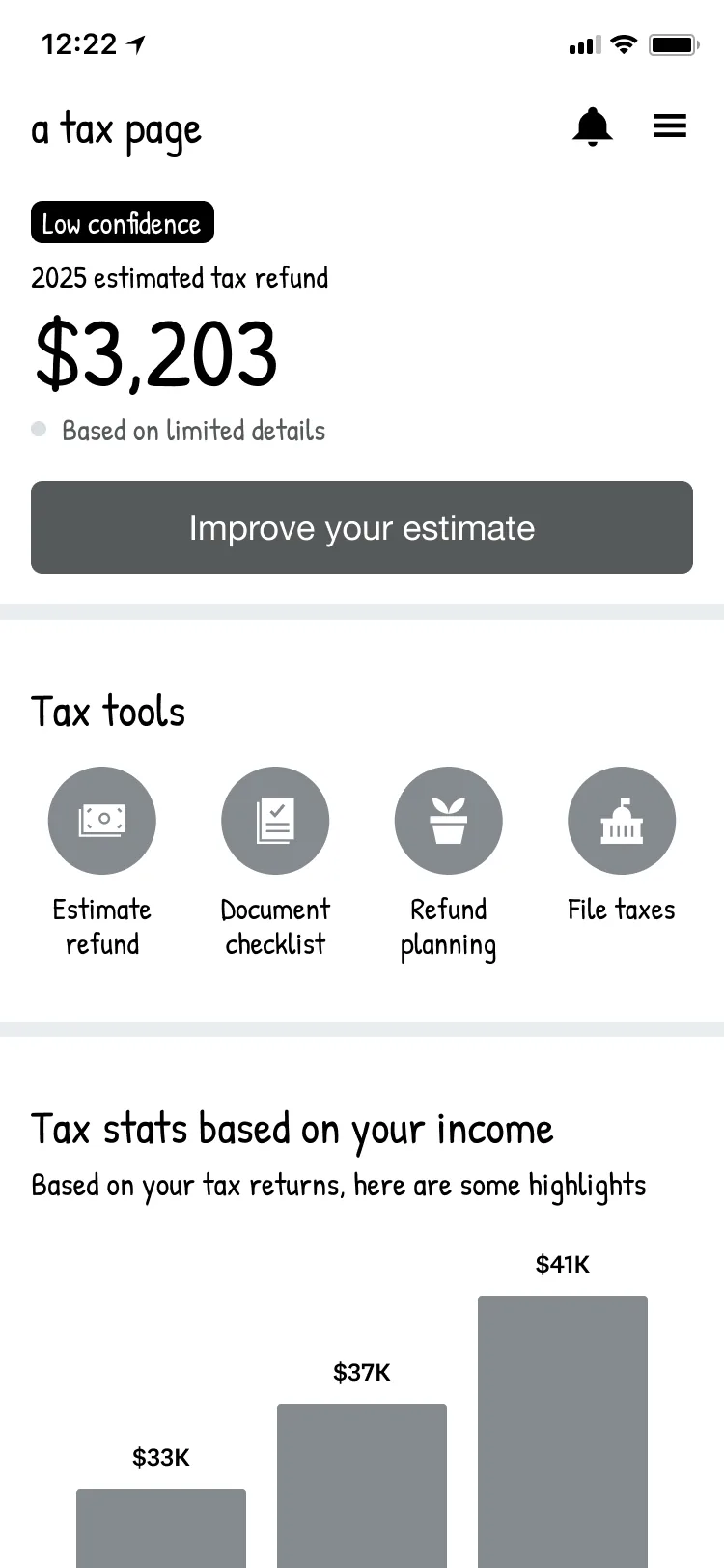
If we signal that an estimate is less accurate without more detail, members will be more willing to provide that detail early.
If we fork the flow by income type first, W-2 against 1099 and side income, members will find and enter the right details with less friction.
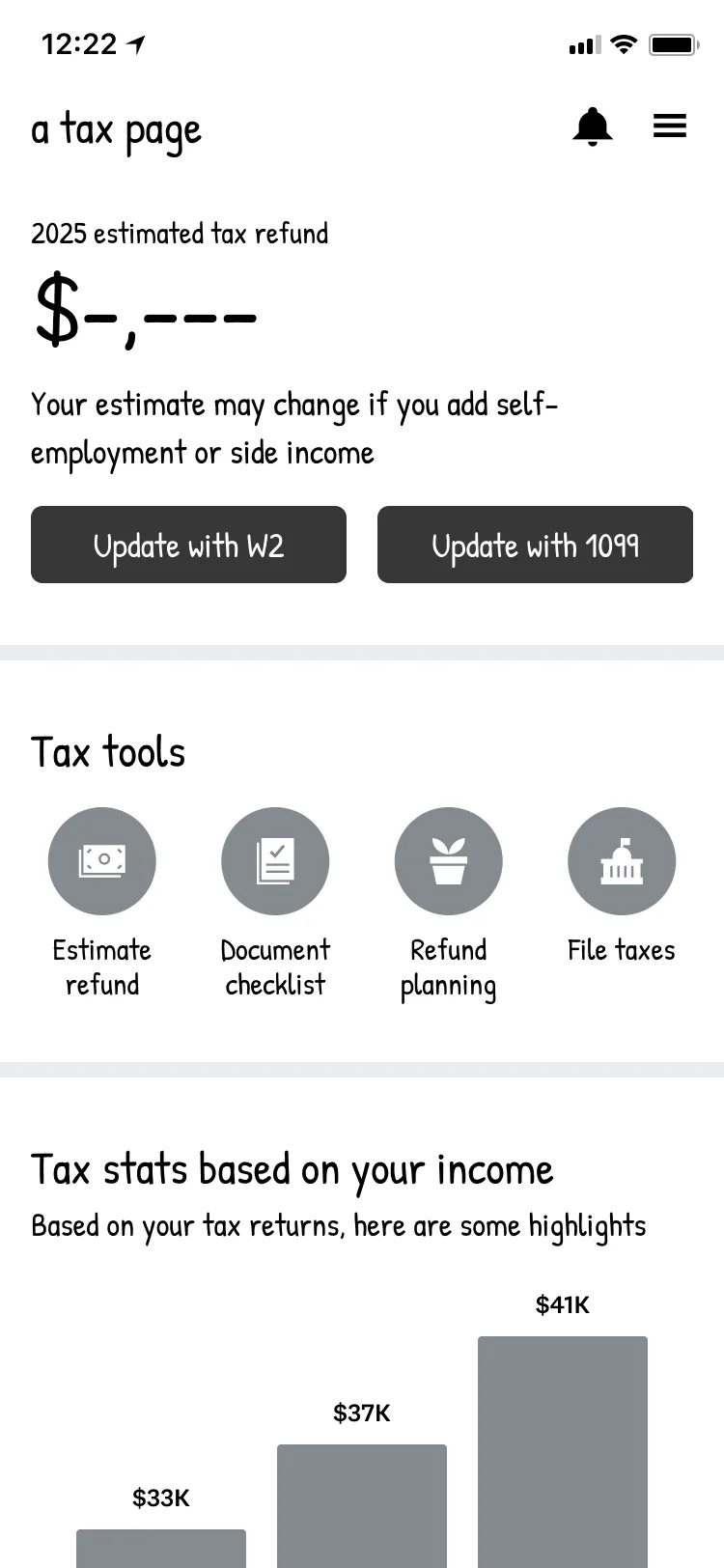
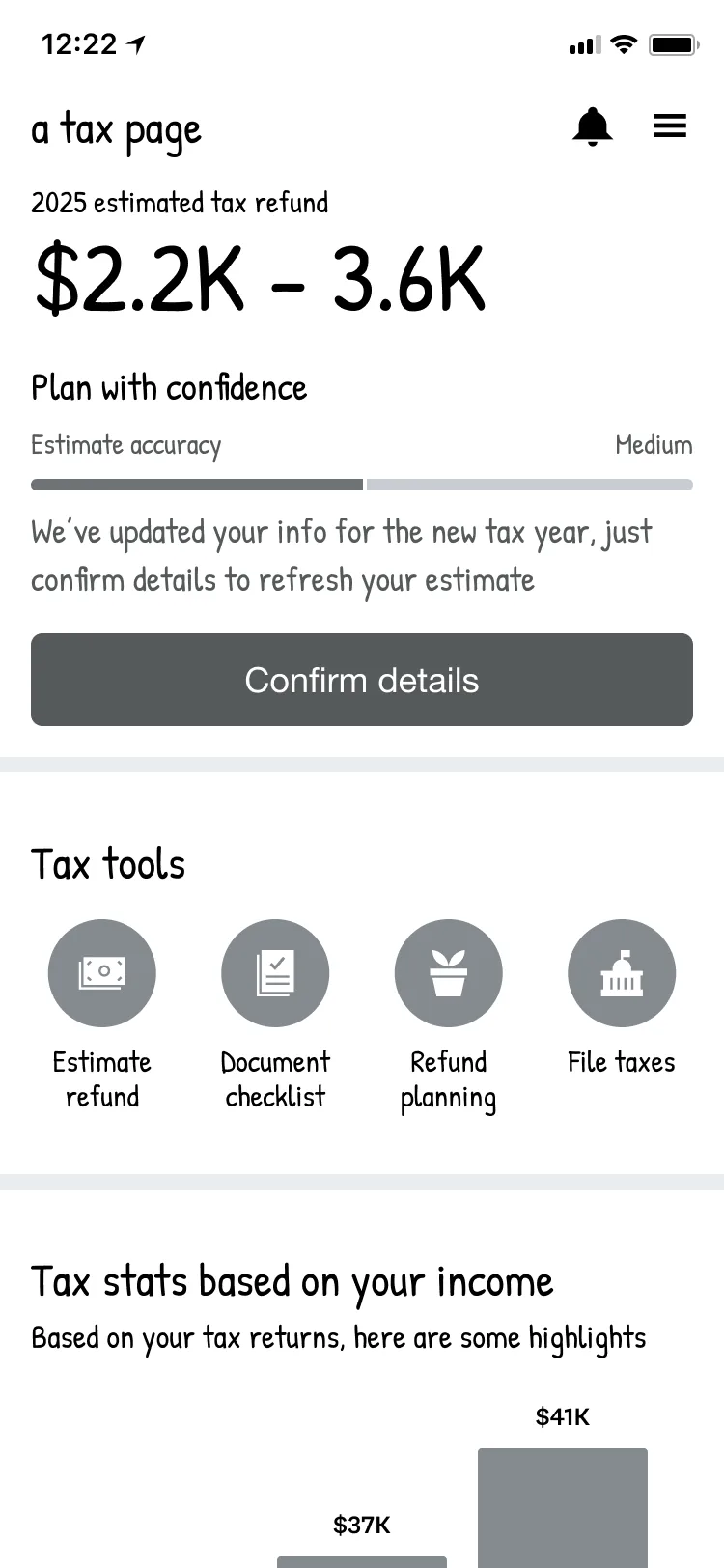
If we surface a path into a fuller estimate when a member starts, those who want a sharper number will keep going, knowing they can get a more tailored result.
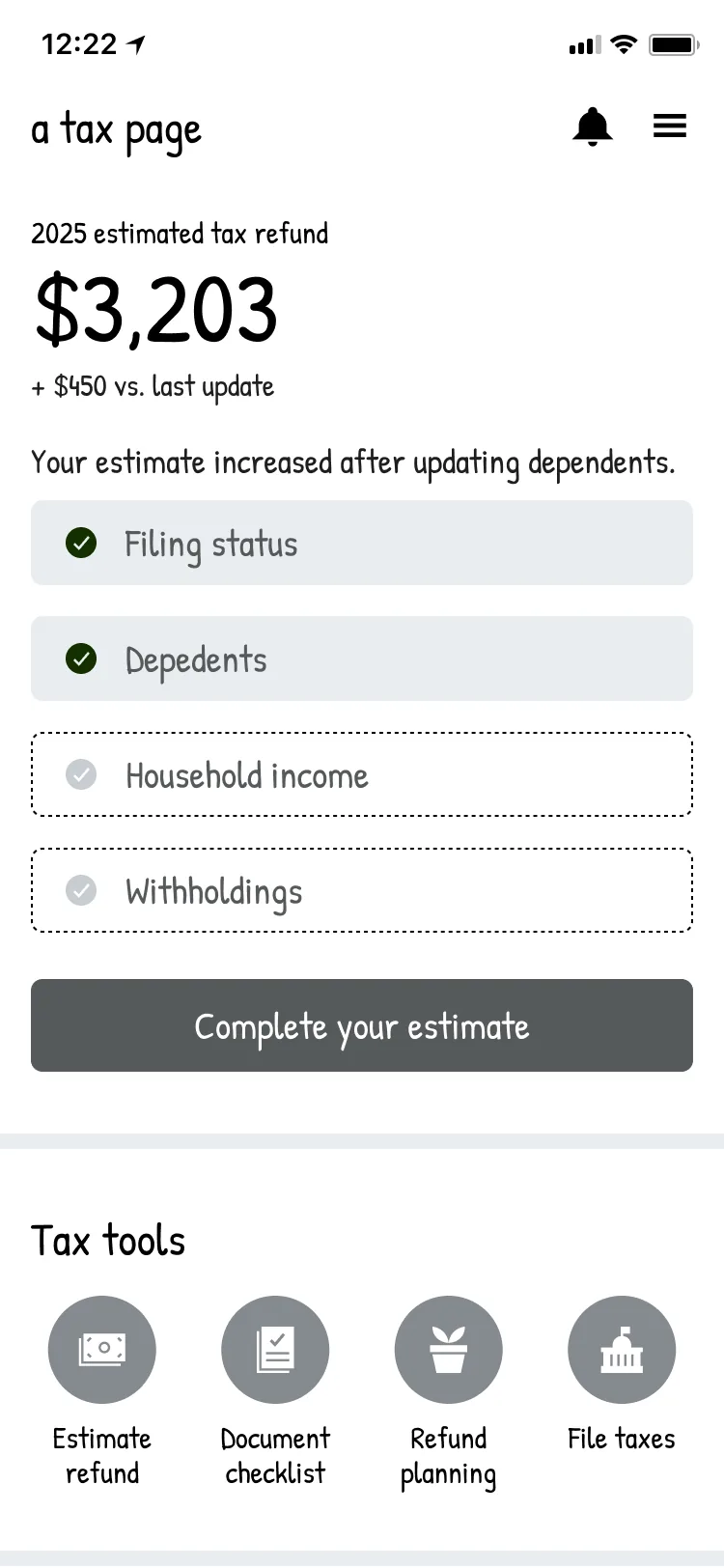
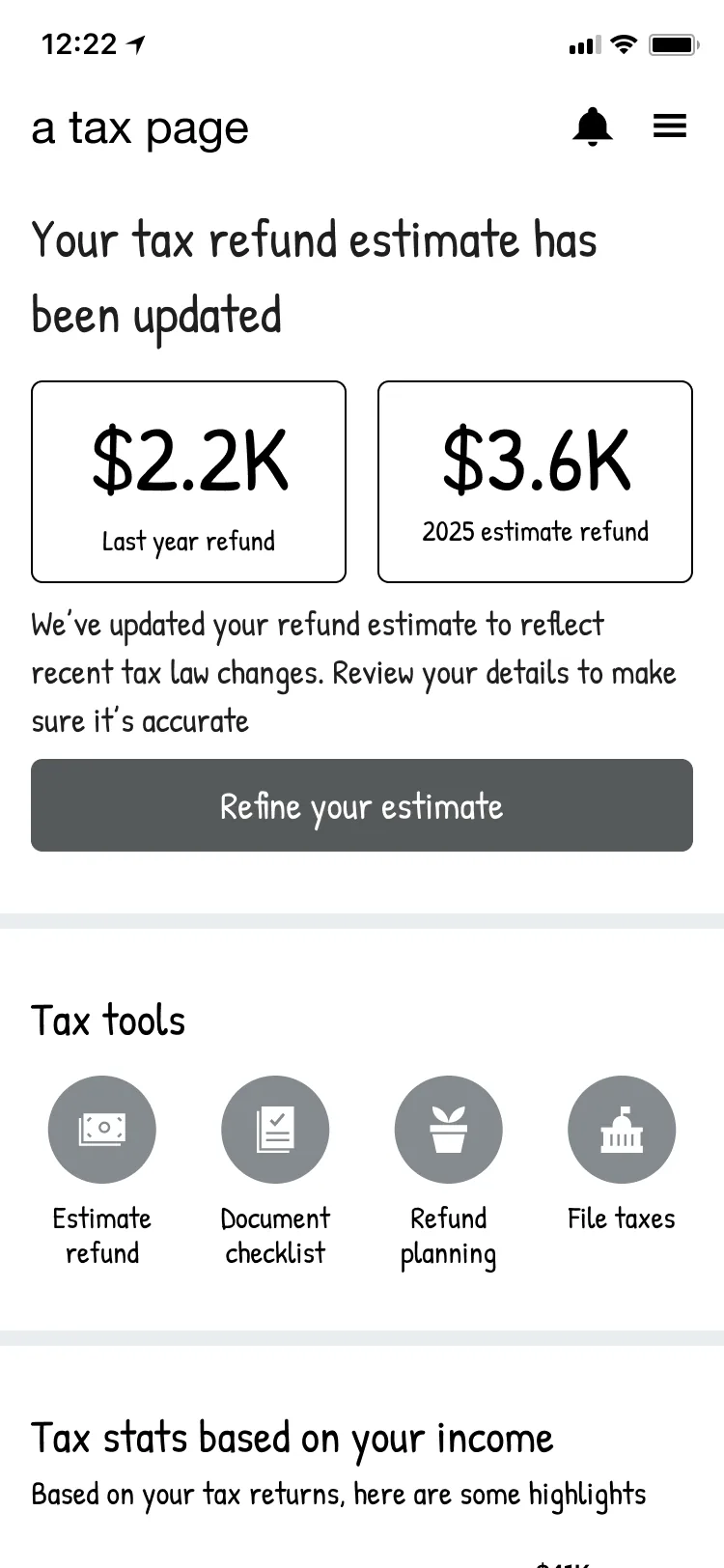
We took the strongest treatments to an A/B test in market. Each made a different bet, visible right under the number.
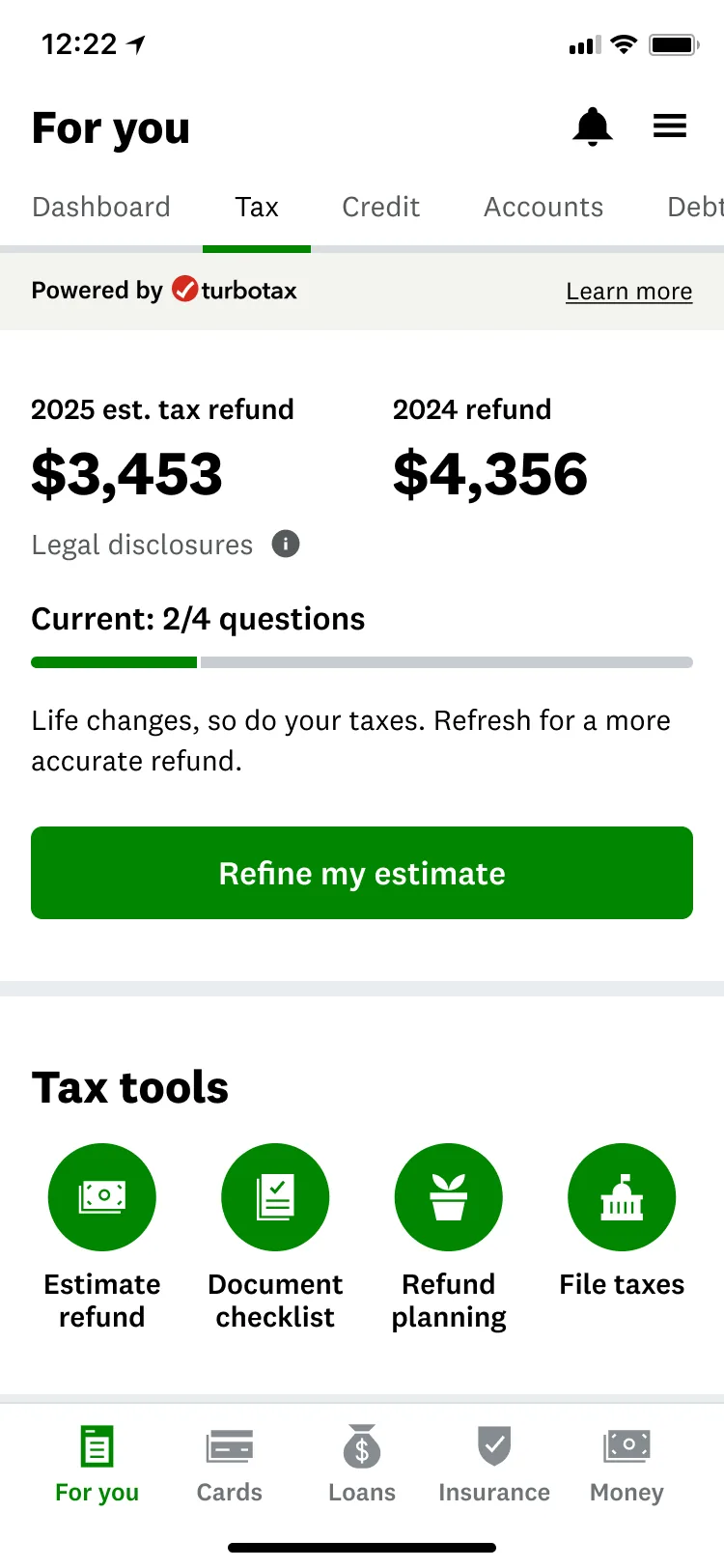
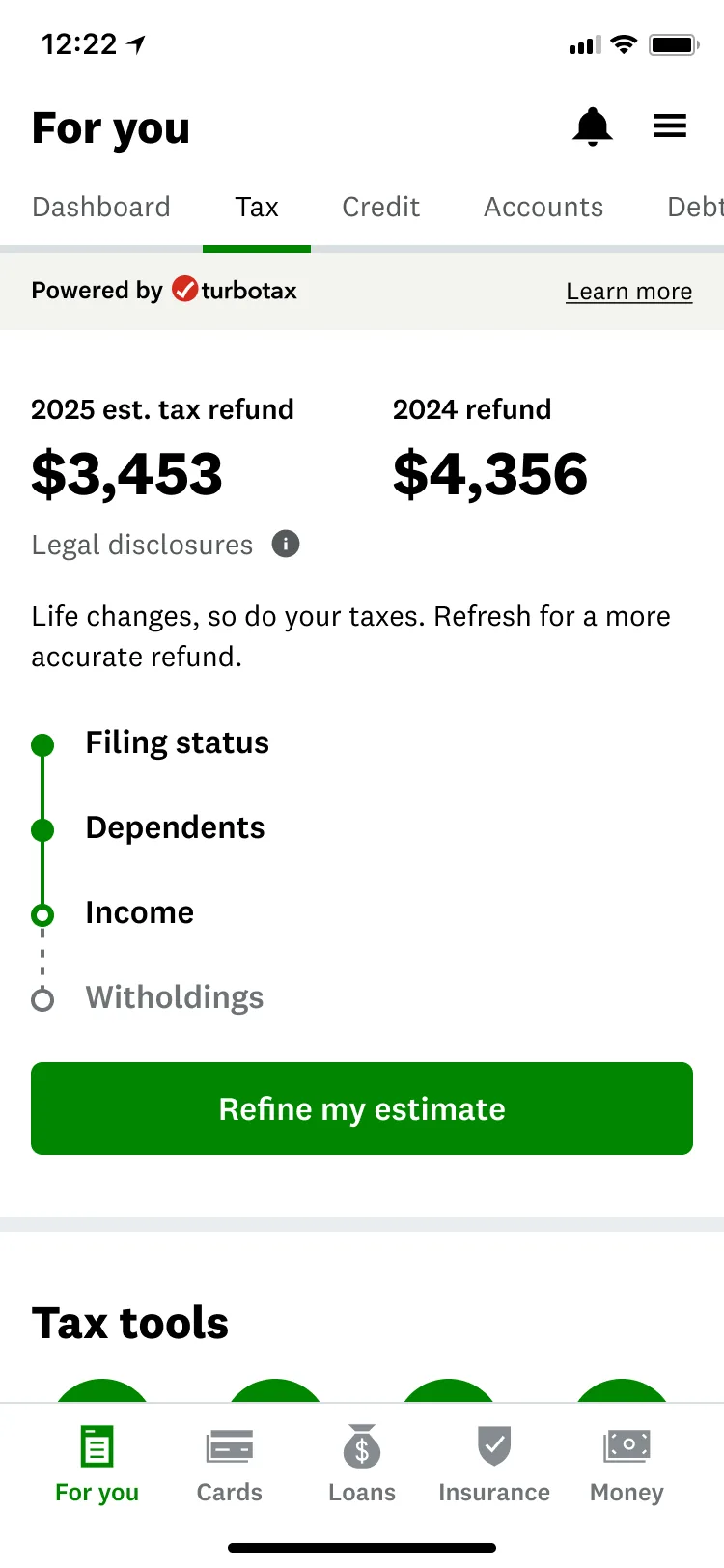
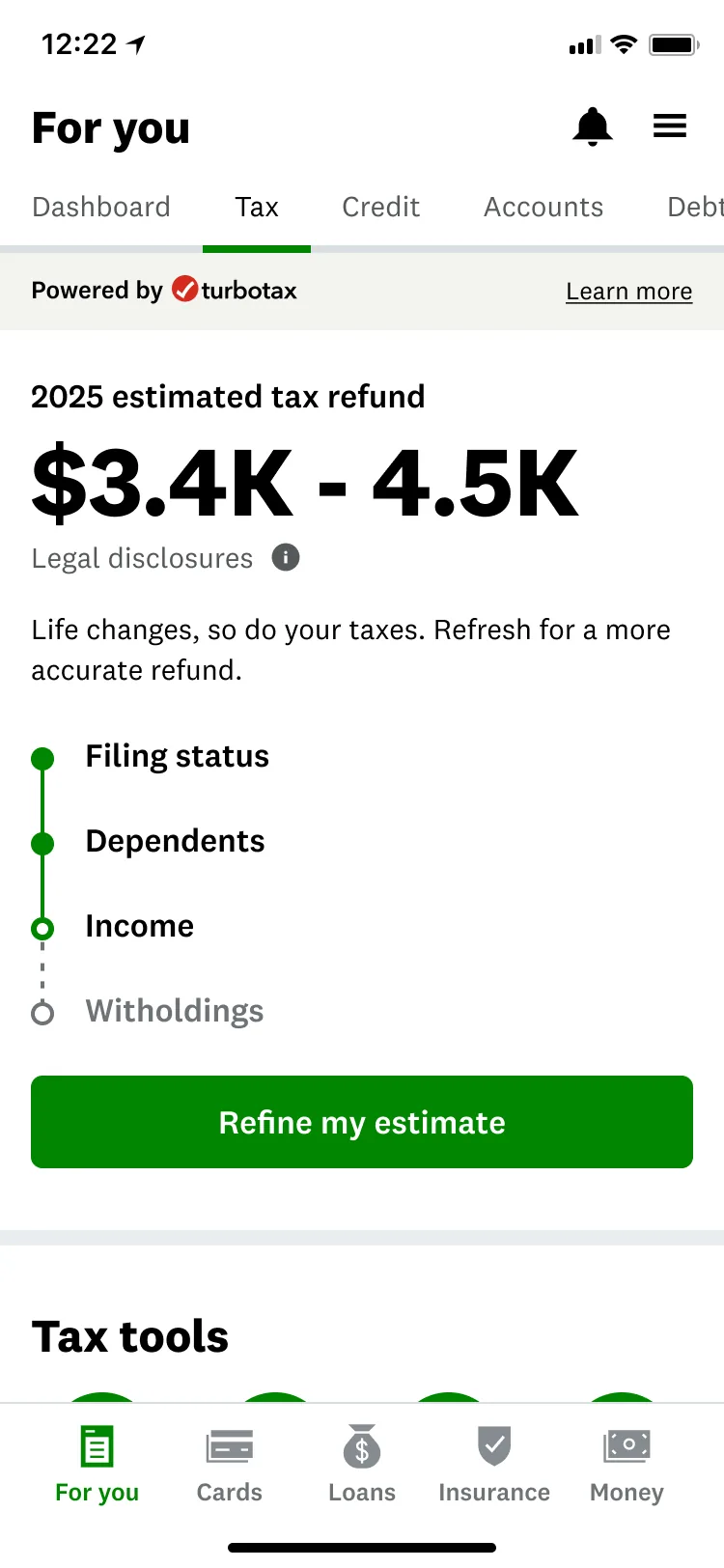
Members said they wanted to see every step ahead of them. In market, the simple control won, and it drove a measurable lift at the door. The call that mattered was trusting the behavior over the stated preference, and shipping the version members used instead of the version they praised. The data held a second signal worth keeping: the members who did enter the stepped path were the ones who finished the estimator. So the simple door earns the click and the guided path earns the completion. One surface, two jobs, designed on purpose rather than chosen by vote.
A refund estimate is never one screen. Behind the number sit very different people and moments: students, members who owe or face a balance due, returning members with last year to compare against, the rough first estimate and the finished one. I designed the system so a single logic bends to each of them, and the reason behind the number reads correctly every time.
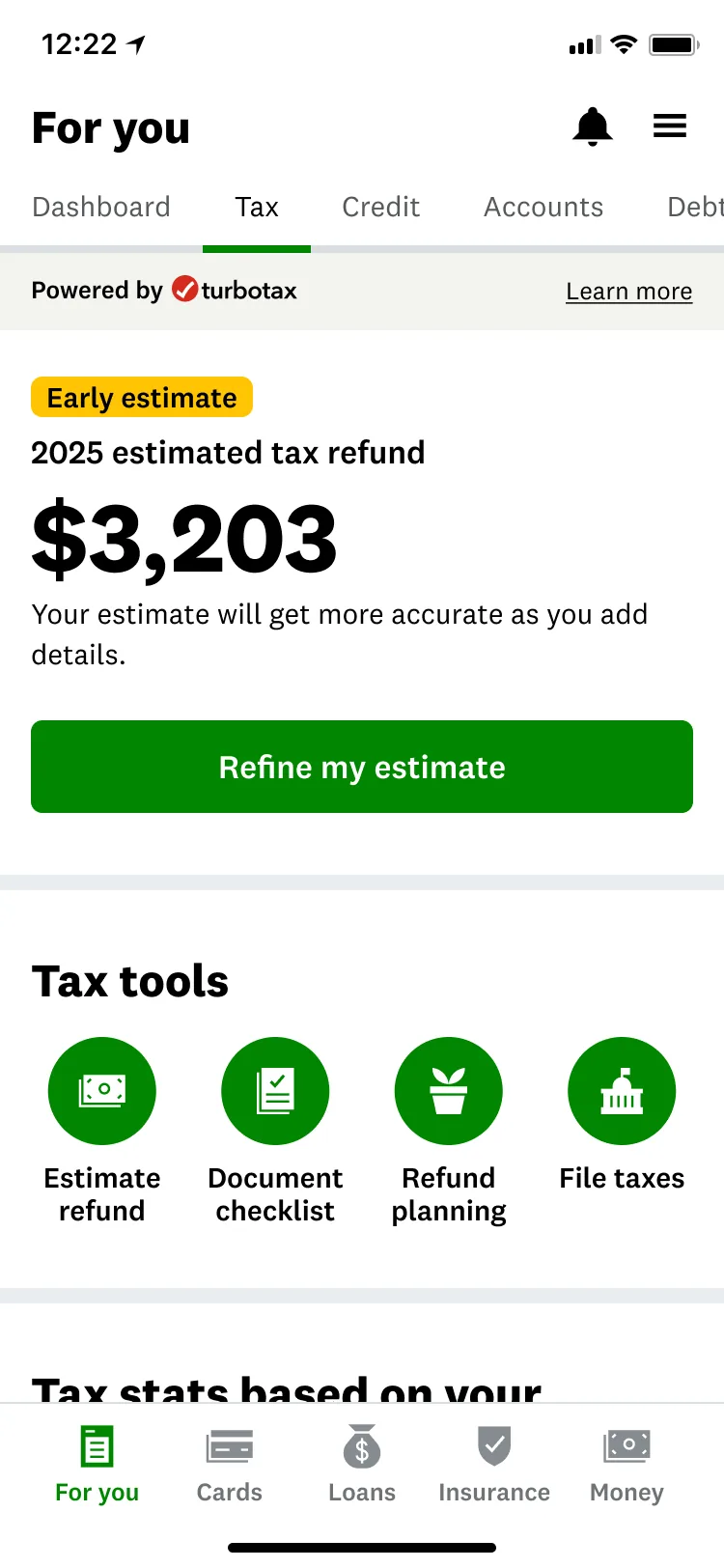
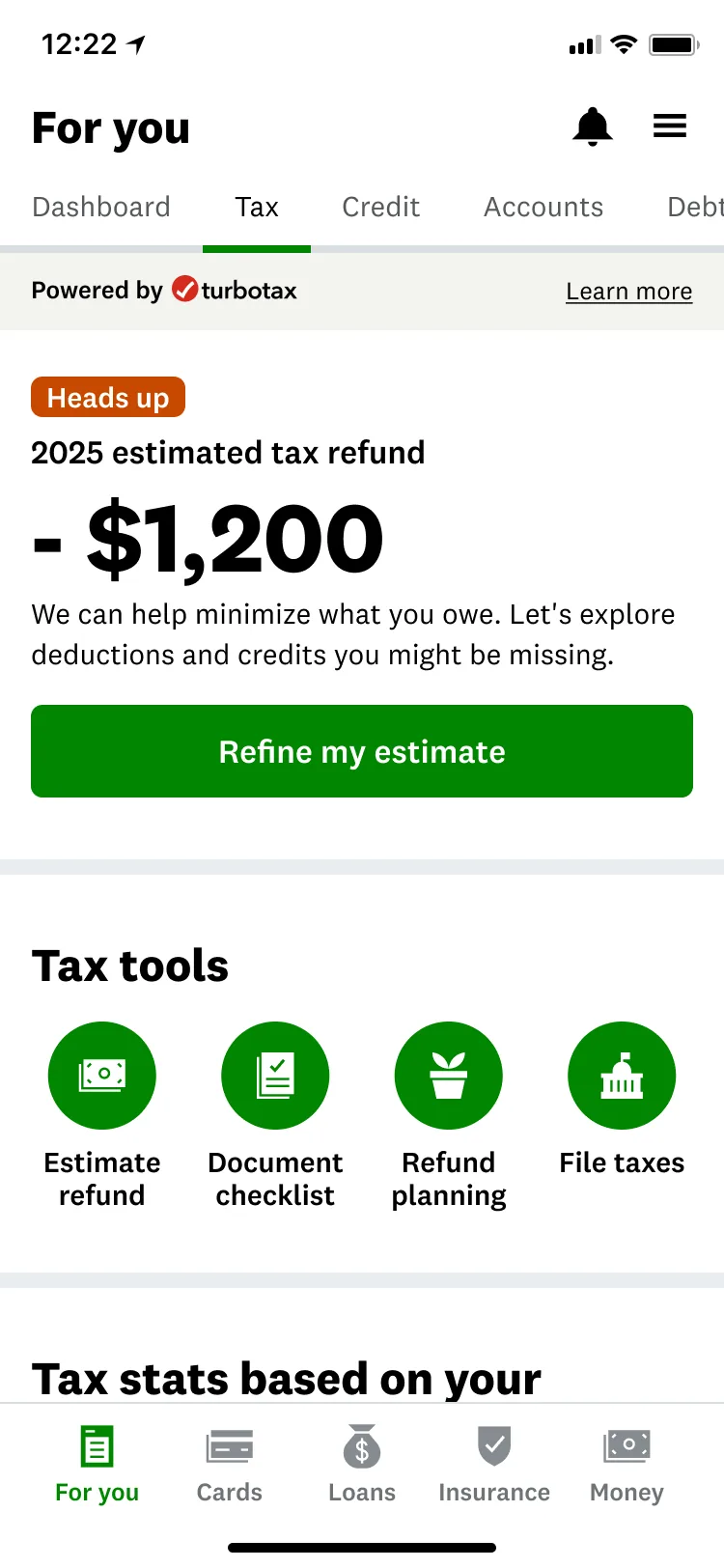
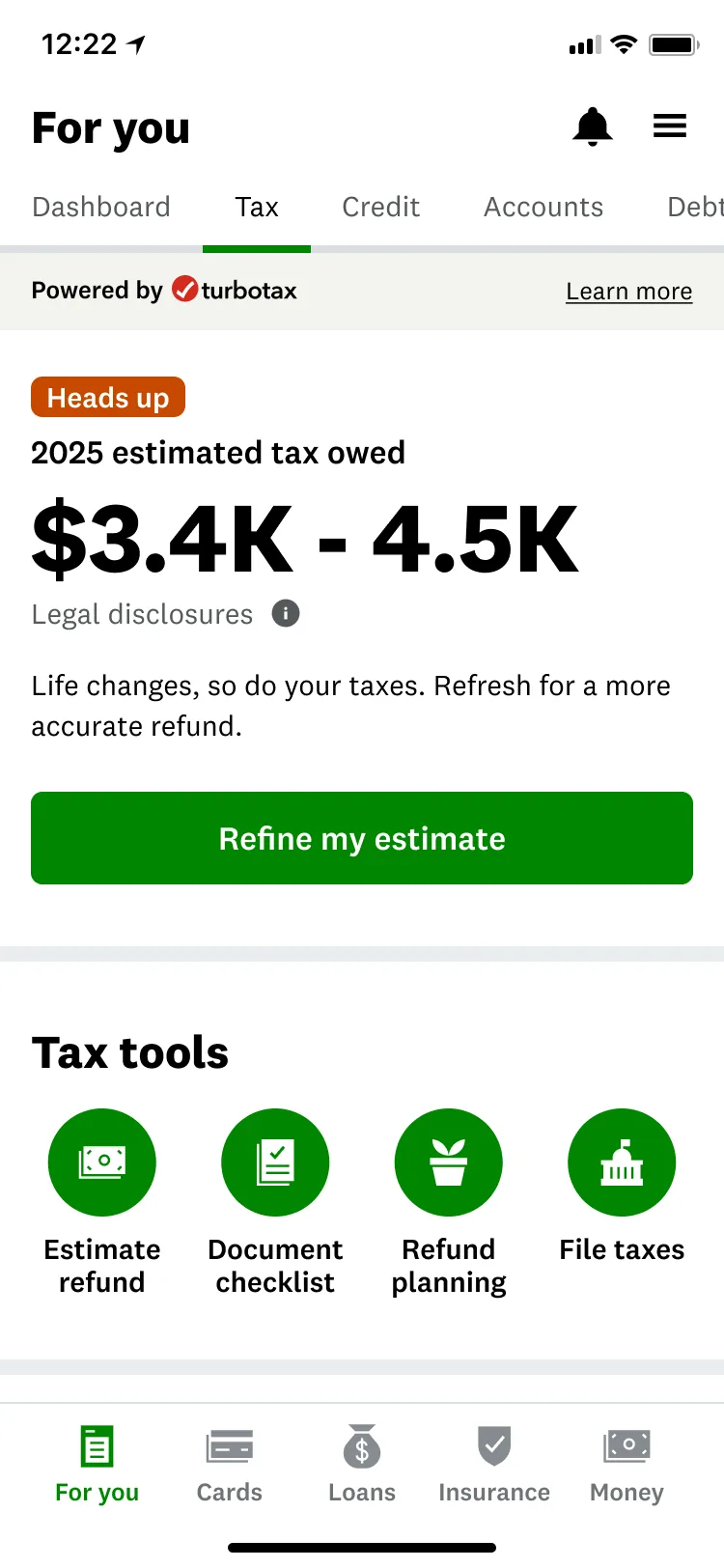
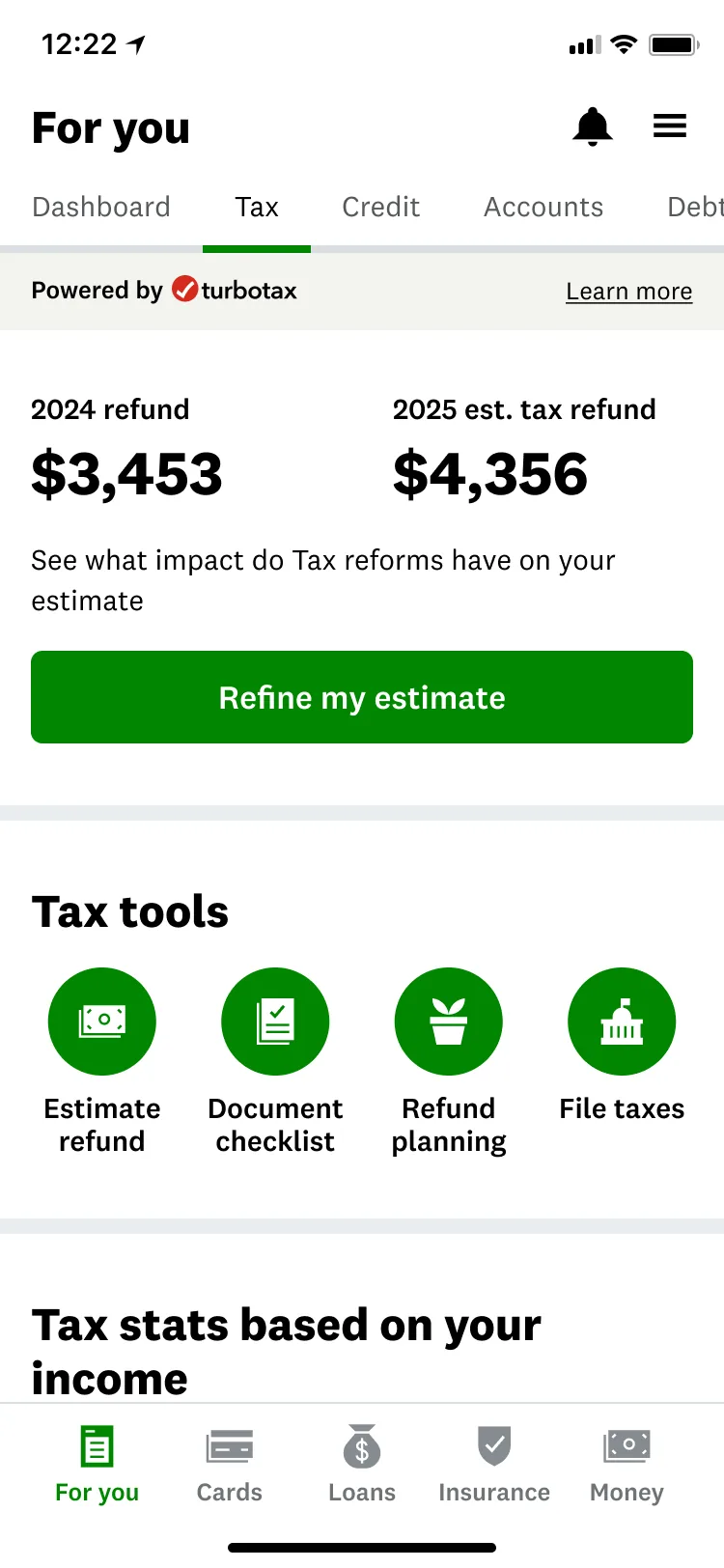
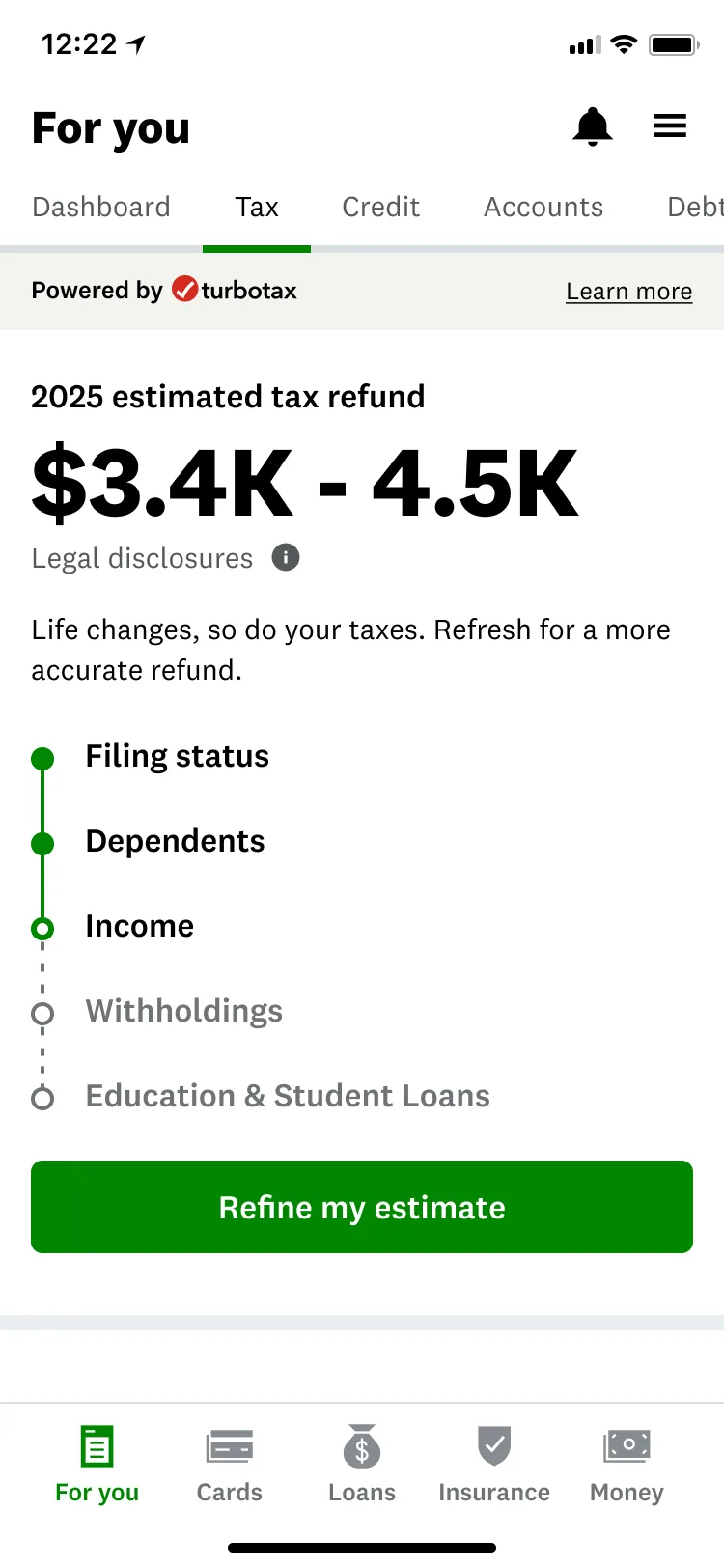
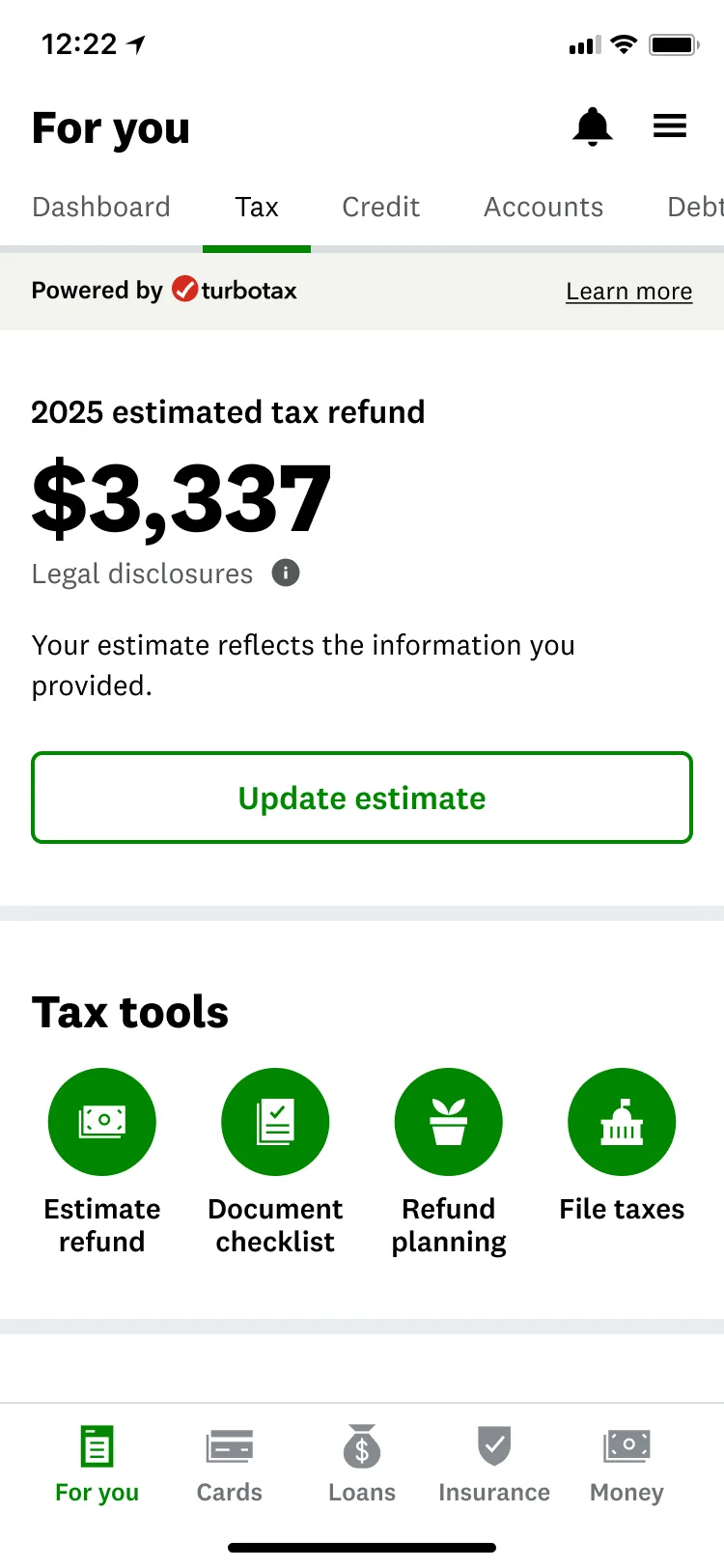
We shipped in milestones because the ground kept moving. Under the 2025 reform, tips and overtime pay would no longer be taxed the way they had been, real money for a lot of members, but only if they understood it and knew whether it applied to them. I folded a brand-new deduction into the estimator without turning it into a tax lecture: surface it at the right moment, ask only what we needed, and let members without tip or overtime income move straight past. The harder problem was never the screen. It was turning a statute into a sentence a member could trust.
Milestone three added money members could actually get back. The 2025 reform lets some filers deduct interest on a loan for a new, U.S. assembled car, behind real fine print: new and for personal use, final assembly in the U.S., loan started after December 31, 2024, and a phase-out at higher incomes. Rather than bury that, I designed the qualification as a short, honest conversation and made the "you do not qualify" answer as clear and respectful as the "you do."
Static frames show decisions. A working flow shows the system. This is the shipped path, built one to one from the design system: the simple front door opening into the guided refine, the 2025 tips and overtime deduction with its takeover sheet, and the auto loan question that decides who qualifies. Play it: pick a filing status, add dependents, enter tips, answer the auto loan question, and watch the estimate move with every input.
Live prototype, built in code from the shipped design system. Try a household income above $150,000, then answer the auto loan question, to see the deduction phase out.
All three milestones shipped and held in market. The simpler front door drove a measurable click lift, and because it gates the entire tax funnel, that lift compounded through every flow behind it, contributing to product initiatives that beat revenue targets by more than $2M. This is the flagship engagement product that carries members into filing with TurboTax, so a point of trust at the door pays out all the way down. Different vertical from the loan marketplace, same standard: real people, real numbers, measured from what actually shipped.
Moving from a revenue-critical marketplace to a trust-critical tax flow was deliberate. What carries across is not a surface, it is a way of working: find the highest-leverage problem, decide what is worth building before building it, turn legal and technical complexity into something a person can act on, and leave behind a system the next team can extend. On a brand-new pod, under law that was still being written, that is the direction I set and the standard I held. Tax is where I proved it holds under pressure.